Special Stories: Integrating a Playful Handwriting Font into Your Creative Workflow
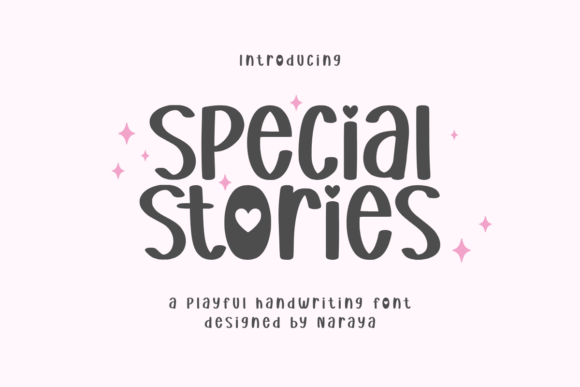
In the world of digital design and creative production, typography is rarely just about choosing a "pretty" font. It is a strategic decision that influences tone, brand perception, and the efficiency of your production pipeline. Special Stories, a playful handwriting font, occupies a specific and highly functional niche in the creative toolkit. It is designed to evoke warmth, authenticity, and a personal touch, making it an ideal asset for creators ranging from small business owners to social media managers. Understanding where this font fits—before, during, and after your production process—is key to leveraging it effectively.
Understanding the Asset: Beyond Aesthetics
Before integrating any asset into a workflow, it is essential to define its characteristics. Special Stories is classified as a playful handwriting script. Unlike rigid sans-serifs or formal serifs, this font mimics the natural flow of hand-lettering. This characteristic makes it particularly effective for projects that require a human element. However, its utility extends far beyond simple decoration. For professionals, it serves as a functional tool for specific communication goals, such as softening a corporate message, adding whimsy to a children’s brand, or creating a focal point in a busy layout.
The font's versatility is one of its strongest workflow attributes. It is compatible with a wide range of file types and platforms, most notably SVG files and Cricut machines. This compatibility ensures that the font is not confined to the screen; it bridges the gap between digital design and physical production. Whether you are creating digital assets for a blog or physical products for a storefront, the font's structural integrity remains consistent.
Strategic Placement in the Production Process
Effective design workflows rely on clear stages: planning, execution, and quality control. Special Stories can be integrated at each of these points, but its role changes depending on the stage.
The Planning and Ideation Phase:
Before opening your design software, the decision to use a handwriting font should align with the project's emotional goal. If the objective is to create a "back-to-school" planner sticker or a motivational quote for Instagram, Special Stories should be identified during the mood-boarding phase. This prevents the common workflow bottleneck of searching for fonts mid-project. By pre-selecting the font, you establish a visual direction that guides color palettes and layout structure. For example, the irregular baselines typical of handwriting fonts require more generous white space than standard block text; accounting for this early saves time during layout.
The Execution Phase:
During production, the font acts as the primary vehicle for voice. In the context of Cricut projects, the execution phase involves converting text into paths. Special Stories excels here because its connected letterforms (when kerned correctly) allow for continuous cutting lines in vinyl or cardstock, reducing material waste and weeding time. For digital creators, such as those designing logos or social media headers, the font serves as a highlight tool. It is rarely used for body copy due to readability constraints; instead, it is reserved for headlines, subheadings, or call-to-action buttons where immediate emotional engagement is required.
Integration with Tools and Platforms
A font does not exist in a vacuum. Its value is determined by how well it interacts with other tools in your stack. Special Stories is designed for broad compatibility, but specific workflows require specific handling.
- Cricut and Silhouette Machines: When preparing files for physical cutting, the font's "playful" nature requires attention to connection points. While Special Stories is optimized for flow, users must ensure that the font size is large enough for the machine to cut intricate loops or swashes. A practical tip is to perform a "test cut" on scrap material before committing to a final run of stickers or shirts.
- Design Software (Adobe Suite, Canva, Affinity): In these environments, the font pairs well with clean, geometric sans-serifs. A common workflow is to use a neutral font for informational text and Special Stories for emotional emphasis. This contrast ensures that the design remains legible while still conveying a playful tone.
- Planners and Digital Journals: For planners, the font can be used to create section headers that feel personal, mimicking the look of a handwritten bullet journal. This is particularly useful for creators selling digital planner templates who want to offer a premium, customized feel without the user needing to hand-letter themselves.
Practical Implementation: From Concept to Output
Moving from theory to practice involves understanding the nuances of the font's application. The goal is to maintain quality control while maximizing efficiency.
Optimizing for Specific Use Cases
Merchandise and Apparel (Shirts):
When designing for apparel, the legibility of Special Stories at a distance is a primary concern. Handwriting fonts can sometimes lose definition when printed on textured fabrics like cotton. The implementation tip here is to increase the font weight or add a subtle outline (stroke) in your design software to ensure the text "pops" against the fabric. Furthermore, consider the message. A playful font is excellent for casual wear, bachelorette party shirts, or children's apparel, but may not suit corporate uniforms.
Digital Assets (SVG Files and Logos):
For logos, scalability is non-negotiable. Special Stories works well for boutique brands, bakeries, or lifestyle blogs. However, because handwriting fonts have varying x-heights and baseline shifts, they can be tricky to align with icons. A best practice is to convert the text to outlines (paths) and manually adjust the kerning (space between letters) to create a balanced lockup with your graphic element. This manual adjustment is a crucial step in the quality control process that separates amateur designs from professional logos.
Marketing and Social Media:
On platforms like Instagram or Pinterest, attention spans are short. Special Stories can be used to create "stop the scroll" moments. It is particularly effective for quotes or testimonial graphics. To maintain a consistent brand voice, create a template library where Special Stories is pre-set for specific text blocks. This streamlines the content creation process, allowing you to swap out copy without re-adjusting typography every time.
Managing the "Playful" Element
The descriptor "playful" implies a lack of seriousness, which can be a double-edged sword in professional settings. The key to successful implementation is context. In an educational setting, for example, Special Stories might be used for a kindergarten worksheet or a creative writing prompt, but it should be avoided for standardized testing materials or formal academic papers. For educators and publishers, the font serves as a tool for engagement rather than authority. It signals to the reader that the content is approachable and creative.
Long-Term Use and Consistency
For entrepreneurs and small business owners, brand consistency is paramount. If you adopt Special Stories as part of your brand identity, it must be used consistently across all touchpoints to build recognition. This means using it not just on your social media graphics, but also on invoices, email signatures, packaging inserts, and thank-you cards.
However, longevity requires moderation. Overusing a decorative font can lead to visual fatigue. A sustainable workflow involves defining strict rules for the font's application—perhaps it is reserved exclusively for "Customer Spotlight" features or "Weekly Specials" signage. By codifying these rules in a brand style guide, you ensure that the font remains a fresh and effective tool rather than a visual crutch.
Compatibility and File Management
Finally, a note on technical workflow. Fonts are software assets that require management. Ensure that Special Stories is installed on all devices used by your team to prevent rendering issues (where the font defaults to Times New Roman or Arial). For teams using cloud-based design tools like Canva, uploading the font to the "Brand Kit" ensures that everyone has access and that the visual output remains uniform. This organizational step is often overlooked but is critical for maintaining professional standards, especially when producing high-volume assets like stickers or seasonal campaign materials.
In conclusion, Special Stories is more than just a typeface; it is a functional component of a creative workflow. Whether you are cutting vinyl for a local craft fair or designing a digital campaign for a global brand, the font offers a specific solution for adding human warmth and approachability. By treating it as a strategic asset—planning its use, optimizing its execution, and managing its consistency—you can integrate it seamlessly into your professional process, ensuring that the final output is both visually appealing and functionally sound.