Freya: Integrating Gothic Blackletter Elegance into Your Creative Workflow
In the landscape of digital design, typography is rarely just about legibility; it is about evoking a specific atmosphere and emotional response. For creators working within the realms of dark fantasy, historical fiction, or artisanal branding, finding a typeface that bridges the gap between aggressive structure and organic delicacy can be a significant bottleneck in the production process. This is where Freya, a Gothic Butterfly Blackletter font, enters the workflow. It is not merely a set of characters but a stylistic tool designed to replace the need for complex custom lettering or time-consuming illustration overlays. Understanding how to deploy Freya effectively requires a look at its design philosophy and its practical application in modern creative pipelines.
Understanding the Design DNA
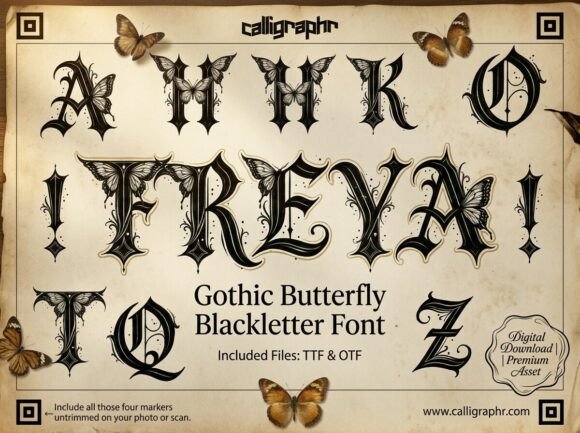
Before integrating a display font into a project, it is essential to analyze its visual components to ensure compatibility with the brand or narrative voice. Freya represents a specific fusion of typographic history and modern aesthetic trends. It is built upon the sharp, aggressive structures of traditional Blackletter, which historically conveys a sense of gravity, tradition, and formality. However, Freya subverts the heaviness often associated with Gothic scripts by weaving in delicate, organic elegance of butterfly wings and ethereal vine work.
This dual nature creates what can be described as a dark-cottagecore aesthetic. It appeals to a visual language that values the macabre but frames it within the beauty of nature. For the creative professional, this means Freya can anchor a design in gothic tradition while simultaneously softening the edges with illustrative detail. This balance is crucial when targeting audiences who appreciate intricate design, such as those interested in occult symbolism, artisanal crafts, or cinematic gothic-romance.
Strategic Implementation in Branding and Identity
When initiating a branding project, the selection of typography sets the trajectory for all subsequent visual decisions. Freya is a premium display typeface, meaning it is optimized for impact rather than body copy. Its role in a workflow is typically at the "decision" phase of visual identity, specifically for brands that position themselves outside the mainstream corporate sphere.
Niche Market Application
Consider the specific workflows of niche markets. For an artisanal apothecary or a small business selling botanical remedies, the visual identity must communicate efficacy and mysticism. Using Freya for the wordmark or primary logo allows the business owner to bypass the commissioning of expensive custom hand-lettering. The font’s inherent intricate illustrative detail suggests a level of craftsmanship and care that aligns with handmade products.
Similarly, in the publishing industry, particularly for independent publishers or self-published authors, cover design is a critical factor in conversion rates. Freya serves as an immediate solution for occult book mastheads or fantasy novel titles. It provides the necessary "shelf appeal" by mimicking the look of illuminated manuscripts, which can significantly reduce the time a designer spends searching for complementary assets or drawing ligatures from scratch.
Workflow Integration: From Concept to Execution
Integrating a specialized font like Freya into a production line requires attention to technical compatibility and visual hierarchy. It interacts with other design assets—such as photography, texture overlays, and color palettes—to create a cohesive final product.
Layering and Texture
Because Freya features organic vine work, it interacts best with textured backgrounds. In a practical workflow, this means the font selection should happen early, during the mood-boarding phase. If a project requires a clean, minimalist background, Freya might create too much visual noise. However, for projects utilizing parchment paper textures, dark wood grains, or atmospheric photography, the font blends seamlessly.
For atmospheric music album covers, particularly within the doom metal, dark ambient, or neofolk genres, the workflow often involves heavy post-processing. Freya holds up well under distressing effects. A practical tip for designers is to rasterize the vector text after layout is finalized and apply grain or erosion filters. This allows the sharp structures of the Blackletter to break down organically, further enhancing the "worn" or "ancient" aesthetic without losing legibility at the intended viewing size.
Digital and Social Media Adaptation
The modern creative process rarely ends with print. Adapting complex typography for digital screens, particularly mobile, is a necessary step in the workflow. Freya is well-suited for cinematic gothic-romance social media headers or event posters. However, because of the intricate illustrative detail, sizing becomes a critical quality control checkpoint.
When implementing Freya in a social media template, creators should adhere to a strict hierarchy: use Freya for the primary headline or "hook" only. Avoid using it for dates, times, or calls to action, as the complex strokes may become illegible at smaller sizes. The workflow should involve setting the headline in Freya, then switching to a clean sans-serif or simple serif font for supporting information. This contrast actually highlights the beauty of Freya by juxtaposing its complexity with modern simplicity.
Practical Considerations for Usability
Adopting a new typeface involves more than just aesthetic appreciation; it requires an assessment of usability and long-term value. As a tool, Freya demands a certain level of design literacy to be used effectively.
Software and File Management
From a technical standpoint, Freya is typically delivered in standard formats (OTF, TTF, WOFF) compatible with major design software like Adobe Creative Suite, Affinity Designer, or Procreate. However, because it is a display font, file sizes for web use can be heavier than standard fonts. When building a website, it is efficient practice to subset the font—meaning you only load the specific characters used on the page—to maintain fast loading speeds and adhere to SEO best practices.
Color and Contrast
Freya’s dark-cottagecore soul implies a preference for high-contrast environments. It reads best in light text on dark backgrounds (e.g., cream or gold text on a black or deep forest green background). In a production workflow, testing the font against the intended background color early in the process prevents the need for extensive revisions later. The "wings" and "vines" in the letterforms can sometimes blend into busy mid-tone backgrounds, so ensuring stark contrast is key to maintaining the font's intended impact.
Long-Term Use and Brand Consistency
For entrepreneurs and creators, consistency is the bedrock of brand recognition. Freya is a highly stylized font; its visual footprint is distinct. Once chosen as the primary display type for a brand, it becomes a permanent fixture in the brand's style guide.
Because of its strong personality, Freya limits the brand's ability to pivot toward minimalist or corporate aesthetics in the future. Therefore, the decision to use Freya should be viewed as a long-term commitment to a specific narrative. It is ideal for businesses that are confident in their gothic, alternative, or artisanal positioning. For those who anticipate evolving their brand into broader markets, Freya might be better utilized for seasonal campaigns, limited edition product lines, or specific event marketing rather than the primary permanent logo.
Conclusion
Freya offers a solution to a very specific creative problem: how to achieve the look of hand-crafted, dark-romantic typography within a digital workflow. By understanding its structural components—the aggressive Blackletter base balanced by ethereal organic details—creators can deploy it effectively across various media. Whether used for a book cover, a product label, or a digital header, Freya functions as a powerful asset that bridges the gap between historical script and modern design, provided it is implemented with attention to hierarchy, contrast, and brand consistency.