College Retro: A Deep Dive into the Vintage and Grunge Display Font
In the expansive world of digital typography, selecting a font that effectively captures a specific mood while maintaining legibility can be a challenging task. Designers often find themselves navigating a sea of generic sans-serifs and overly stylized scripts, searching for something that offers character without sacrificing utility. College Retro emerges in this landscape as a distinct contender. It is a vintage and grunge-distressed display font designed to inject a sense of history, texture, and personality into visual projects. However, understanding where it fits within a broader design strategy requires looking beyond the surface aesthetics and evaluating its technical properties, practical applications, and how it stacks up against other stylistic choices.
Defining the Aesthetic: What Makes College Retro Unique?
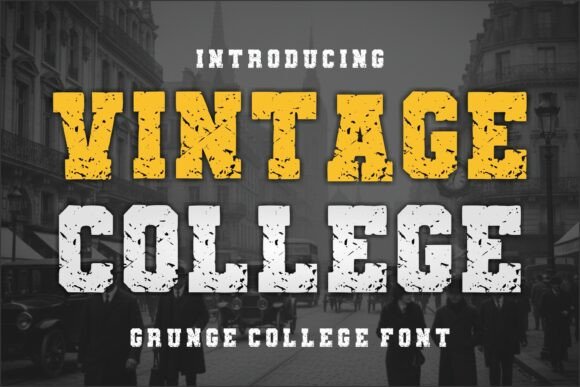
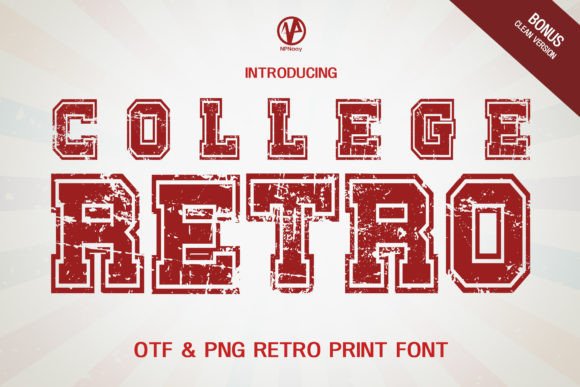
At its core, College Retro is defined by its distressed and vintage characteristics. Unlike clean, modern geometric typefaces that prioritize precision, this font embraces imperfection. The "grunge" element refers to the texture applied to the letterforms—often simulating ink bleed, rough edges, or weathering that mimics aged signage or worn collegiate apparel. This texture is not merely decorative; it serves to evoke a specific era, typically referencing mid-20th-century Americana, vintage sports branding, or retro academic aesthetics.
The term "display font" is crucial to understanding its intended use. Display typefaces are designed for impact at larger sizes, such as headlines, logos, or posters. They often feature unique details that would become illegible or cluttered at smaller body-text sizes. College Retro fits this category perfectly. Its bold structure and textural details command attention, making it a strong choice for scenarios where the text needs to be the focal point of the design.
The Role of Texture in Typography
When comparing College Retro to standard digital fonts, the primary differentiator is the pre-baked distressing. In traditional design workflows, achieving a vintage look often required applying separate grunge textures or masks over clean text in post-production software like Adobe Photoshop. While this method offers flexibility, it can be time-consuming and inconsistent across different platforms. College Retro streamlines this process by embedding the texture directly into the font file. For designers working within time constraints or those who lack advanced image editing skills, this built-in aesthetic provides a practical shortcut to achieving a polished, retro look.
Practical Applications and Use Cases
Evaluating the "fit" of a font involves looking at the specific demands of a project. College Retro is not a universal solution for all design needs, but it excels in specific environments where a nostalgic or rugged tone is required.
Branding and Merchandise
One of the most common applications for a font like College Retro is in branding, particularly for businesses or organizations that want to project an image of authenticity, heritage, or durability. Consider the coffee shop that wants to evoke a rustic, artisanal vibe, or the brewery aiming for a classic, industrial feel. In these contexts, the distressed texture of the font reinforces the brand narrative.
Furthermore, College Retro is highly effective for merchandise design. On apparel—specifically t-shirts, hoodies, and caps—the vintage distressed look is a perennial trend. The font’s texture often prints well on fabric, as it mimics the natural fading and cracking that occurs with garment printing techniques like screen printing or Direct-to-Garment (DTG) printing. Using a clean, vector-perfect font on a t-shirt can sometimes look stark or out of place; a font like College Retro integrates more organically with the textile medium.
Event Promotion and Editorial Design
For event organizers, particularly those hosting themed events, reunions, or music festivals, this font offers immediate thematic signaling. A poster for a vintage car show or a rockabilly concert benefits from a typeface that visually communicates the event's genre. Similarly, in editorial design, such as magazine covers or blog headers focusing on history, retro gaming, or fashion, College Retro can establish the tone before the reader engages with the body copy.
Comparison with Alternative Stylistic Approaches
When researching font options, it is helpful to compare College Retro against other categories of typefaces to understand the tradeoffs involved. This comparison is not about finding a "better" font, but rather identifying the right tool for the specific creative problem.
College Retro vs. Clean Sans-Serifs
The most obvious contrast exists between College Retro and modern, clean sans-serif fonts (such as Helvetica, Futura, or Montserrat). Clean sans-serifs prioritize legibility, neutrality, and scalability. They are the workhorses of corporate communication, UI design, and body text.
If a designer is working on a mobile app interface or a technical manual, College Retro would be a poor choice due to its textural complexity, which can hinder readability at small sizes. However, for a logo or a hero banner, the clean sans-serif might lack the emotional resonance that College Retro provides. The decision here hinges on the hierarchy of information: use the clean font for data delivery, and use College Retro for emotional delivery.
College Retro vs. Handwritten and Script Fonts
Another category often considered alongside vintage display fonts is handwritten or script typography. Both styles aim to break away from the rigidity of standard digital text. However, they convey different messages.
Script fonts often suggest elegance, femininity, or personal intimacy (e.g., wedding invitations). College Retro, conversely, leans towards masculinity, ruggedness, and institutional history. If the goal is to create a design that feels "hand-crafted" but robust rather than delicate, College Retro is often the superior choice. It provides a human element through its imperfections without the fragility associated with cursive scripts.
College Retro vs. Standard Serif Fonts
Traditional serif fonts (like Times New Roman or Garamond) suggest authority, tradition, and academic rigor. While College Retro shares the "academic" association due to its name and style, it approaches tradition differently. A standard serif is formal and pristine; College Retro is nostalgic and worn. It suggests a history that has been lived through, rather than a history preserved behind glass. For projects that need to feel accessible and casual rather than elite and formal, College Retro bridges that gap effectively.
Evaluating Tradeoffs and Limitations
No typographic choice is without its limitations. To make an informed decision, one must acknowledge the constraints of using a distressed display font like College Retro.
Readability and Scalability
The primary tradeoff is readability. The very textures that give College Retro its charm can become noise when the font is scaled down. At small sizes, the grunge details may merge, making letters difficult to distinguish. This makes it unsuitable for long-form reading or fine print. Designers must ensure that when using College Retro, the font size is large enough for the texture to be appreciated as a stylistic detail rather than a visual obstruction.
Visual Weight and Density
College Retro generally carries a heavy visual weight. It demands space and attention. If a design is already visually busy—containing complex imagery, multiple color blocks, or competing elements—adding a heavy, textured font can lead to clutter. It works best when paired with ample whitespace or simple backgrounds that allow the typography to breathe. Pairing it with a lightweight, neutral sans-serif for supporting text is a common strategy to balance the composition.
Trend Sensitivity
While vintage styles are cyclical and generally enduring, specific eras of "retro" can sometimes feel dated if not applied thoughtfully. The "grunge" aesthetic was particularly popular in the 1990s. While it has seen a resurgence, designers should consider whether the specific distressing style of College Retro aligns with the current brand identity they are building or if it risks looking like a relic of a past trend rather than a timeless vintage piece.
Decision Factors: Is College Retro the Right Choice?
Determining whether to add College Retro to your toolkit involves a quick assessment of your project's goals. It is likely the right choice if:
- Your project requires an immediate emotional connection to the past, specifically mid-century or collegiate themes.
- You are designing for physical products where texture adds value (e.g., apparel, packaging, posters).
- You need to establish a bold, masculine, or rugged tone.
- You want to avoid the extra steps of applying external grunge textures to your typography.
However, you may need to explore other options if:
- The project requires high legibility for body text or user interfaces.
- The brand identity is strictly modern, minimalist, or corporate.
- The design environment is already texturally dense and requires a clean typographic anchor.
Conclusion
College Retro is more than just a collection of letters; it is a stylistic tool that communicates era, attitude, and texture. Its value lies in its ability to instantly transform a flat design into something with depth and narrative. By understanding its strengths as a display font and acknowledging its limitations regarding scalability and context, designers can use College Retro confidently. Whether used for a vintage-inspired logo, a striking headline, or merchandise that stands out, it offers a practical way to achieve a distressed, retro aesthetic without compromising on professional quality.