Evaluating Opera Signature: A Practical Guide to a Dual-Nature Font
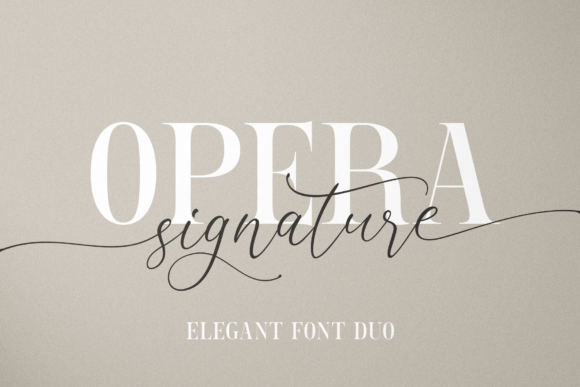
In the vast ecosystem of digital typography, finding a typeface that bridges the gap between organic warmth and structural integrity is a common challenge. Opera Signature represents a specific solution to this problem, presenting itself as an imposing and refined duo font. By combining the fluidity of a handwritten script with the grounding weight of a serif, it offers a distinct aesthetic. For designers, content creators, and typographers evaluating their options, understanding the specific attributes of this font—beyond its visual appearance—is essential for making an informed decision.
The Anatomy of a Duo Font: Handwritten Meets Serif
To appreciate where Opera Signature fits in a font library, one must first understand its structural composition. It is not merely a script font with a heavy weight; it is a deliberate fusion of two distinct typographic categories.
- The Handwritten Element: This aspect of Opera Signature provides the personality. It mimics the natural, imperfect strokes of hand lettering, offering a sense of authenticity and human touch. This is crucial for designs that need to feel approachable rather than sterile.
- The Serif Element: The serif components provide the "imposing" nature of the font. Serifs are traditionally associated with authority, tradition, and readability in longer text. In Opera Signature, these elements anchor the swashes and loops of the script, preventing the text from looking chaotic or overly whimsical.
The result is a typeface that commands attention while retaining an elegant, personal touch. It occupies a middle ground that purely geometric sans-serifs or traditional calligraphy scripts cannot reach on their own.
Technical Utility: The Role of PUA Encoding
When evaluating fonts for professional use, aesthetics are only half the equation; technical accessibility is the other. Opera Signature is PUA (Private Use Areas) encoded, a feature that significantly impacts its usability across different platforms and software.
PUA encoding means that all the extra glyphs, swashes, and stylistic alternates are mapped to specific codes within the font file. For the end-user, this translates to practical benefits:
- Cross-Platform Compatibility: You can access the full character set in standard design software (like Adobe Illustrator or Photoshop) as well as in basic text editors or web platforms that support Unicode.
- No Reliance on OpenType Features: While OpenType features are powerful, not all software handles them gracefully. PUA encoding ensures that even if an application lacks advanced typography panels, you can still copy and paste the specific decorative swash you need.
- Comprehensive Library Access: It ensures that the "imposing" nature of the font can be dialed up or down. Need a simple, clean header? Use the base characters. Need a flourish-heavy logo? Access the swashes without technical hurdles.
This technical robustness makes Opera Signature a reliable asset, particularly for users who work across multiple devices or collaborate with clients who may not have professional design software.
Comparative Analysis: Opera Signature vs. Other Typographic Styles
No font exists in a vacuum. When deciding if Opera Signature is the right choice, it helps to compare it against the standard categories of fonts you might otherwise consider.
Opera Signature vs. Standard Serif Fonts
Traditional serif fonts (like Times New Roman or Garamond) excel in legibility for body text and formal documents. However, they can often feel rigid or corporate. Opera Signature trades some of that rigid legibility for artistic flair. It is rarely the right choice for long-form body copy (like a 10-page report), but it outperforms standard serifs in headers, logos, and branding materials where personality is prioritized over pure reading speed.
Opera Signature vs. Pure Script/Calligraphy Fonts
Pure calligraphy fonts can be beautiful but often suffer from readability issues, especially at smaller sizes or in all-caps scenarios. Because Opera Signature incorporates serif characteristics, it maintains a certain baseline structure. It offers the romance of a wedding invitation font but with the stability of a poster headline. If you find standard scripts too "flimsy" for your design, this duo font provides the necessary visual weight.
Opera Signature vs. Sans-Serif Minimalism
In the age of modern minimalism, sans-serifs dominate web design and app interfaces. Opera Signature is the antithesis of this trend. It is a choice for projects that want to break away from the sterile, uniform look of modern UI. It is a statement font. If your goal is to blend in and remain neutral, a sans-serif is better. If your goal is to evoke emotion, heritage, or luxury, Opera Signature is the stronger candidate.
Best-Fit Scenarios and Practical Applications
Understanding the strengths of Opera Signature allows us to identify its ideal use cases. This font is not a universal solution, but in the right context, it is a powerful tool.
- Branding and Identity: For businesses that want to project an image of "refined elegance"—such as boutique hotels, high-end florists, law firms with a personal touch, or luxury fashion labels—Opera Signature works exceptionally well in logos and wordmarks.
- Editorial Design: In magazines or blogs, it serves as a striking contrast to clean body text. Using Opera Signature for pull quotes or section headers can break the monotony of a page layout.
- Packaging Design: The "imposing" nature of the serif elements ensures shelf presence, while the handwritten aspect suggests artisanal quality or craftsmanship.
- Event Stationery: Due to its dual nature, it fits perfectly on invitations, menus, and signage for events that aim for a formal yet welcoming atmosphere.
Tradeoffs and Limitations to Consider
A balanced evaluation requires acknowledging where Opera Signature might fall short. No single font can do everything, and this typeface has specific limitations.
- Readability at Small Sizes: The intricate details of the swashes and the varying stroke widths can become muddy or illegible when scaled down significantly. It is not designed for fine print, legal disclaimers, or UI navigation elements.
- Visual Density: Because it is described as "imposing," it carries visual weight. Using it for large blocks of text can be overwhelming and exhausting for the reader. It requires ample white space to breathe.
- Stylistic Commitment: Opera Signature has a very specific personality. It leans towards the classic and ornate. If your project requires a futuristic, grunge, or ultra-casual vibe, this font will likely feel out of place.
Making the Decision: Is Opera Signature Right for Your Project?
When evaluating whether to add Opera Signature to your toolkit, consider the emotional resonance of your project. Ask yourself the following questions:
- Does the project require a human touch? If the design feels too cold or automated, the handwritten elements of Opera Signature can introduce warmth.
- Is authority important? If the message needs to feel established and credible, the serif backbone provides that necessary gravitas.
- How will the font be accessed? Given its PUA encoding, it is an excellent choice if you anticipate needing a wide variety of decorative alternates or if you are working in environments where advanced font features might be restricted.
Ultimately, Opera Signature is a specialized tool for creative expression. It is best viewed as a display font—one intended to be seen and admired in headlines, logos, and short bursts of text. For researchers and designers comparing options, it stands out as a versatile middle ground: more structured than a loose script, yet more expressive than a standard serif. By weighing its aesthetic appeal against the technical requirements of your specific workflow, you can determine if this imposing duo font deserves a place in your library.