James: The Typeface Redefining Digital Luxury and Brand Authority
In the current landscape of digital design, the pursuit of authenticity and emotional connection has become paramount. We are moving past the era of purely functional minimalism into a renaissance of sensory richness, where the tactile quality of a brand is as important as its message. At the forefront of this shift is James, an elegant ornamental font that transcends traditional typography. It is not merely a collection of letterforms; it represents the pinnacle of luxury design, offering a sophisticated visual language for professionals who demand excellence.
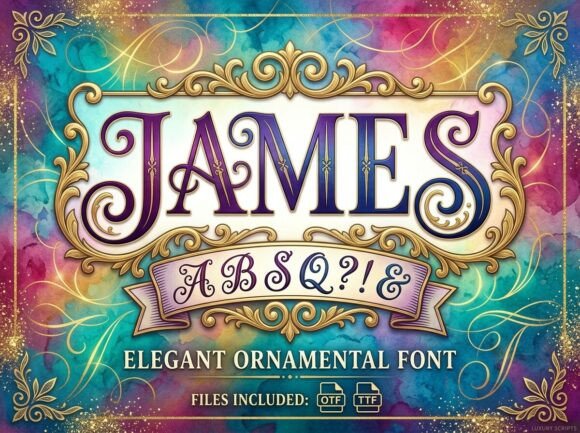
For the modern entrepreneur, creative director, or freelancer, the choice of typography is a strategic decision. It sets the tone for the entire user experience before a single word is read. James enters this space not as a background player, but as a central character. Featuring a stunning royal purple-to-blue gradient and framed within an exquisite gold filigree border, this typeface radiates a level of prestige that is difficult to replicate with standard sans-serifs or traditional serifs. It speaks a dialect of opulence, yet remains accessible enough for contemporary digital applications.
The Aesthetics of Prestige: Beyond Standard Typography
To understand the impact of James, one must analyze its visual composition. Typography often relies on contrast and spacing to create hierarchy. James achieves this through color and texture. The royal purple-to-blue gradient is not arbitrary; purple has historically been associated with royalty, wisdom, and creative ambition, while blue conveys trust, depth, and stability. The seamless transition between these hues creates a dynamic visual flow that feels alive.
Furthermore, the gold filigree border introduces a level of ornamentation that is rare in modern digital assets. In a market saturated with flat design, the intricate detailing of James commands attention. It mimics the craftsmanship of a bygone era—think of illuminated manuscripts or hand-engraved stationery—yet it is packaged for the high-speed demands of the digital age. This juxtaposition allows brands to signal heritage and quality instantly. When a user sees text rendered in James, they subconsciously register a higher value proposition, making it an invaluable tool for conversion-focused design.
Contextual Relevance: Why Luxury is Making a Comeback
The resurgence of ornamental design is not happening in a vacuum. It is a direct response to the changing preferences of the modern consumer. After years of "blanding"—where major corporations stripped their identities down to generic, geometric logos—there is a palpable hunger for personality and flair. Consumers today, particularly in the Gen Z and Millennial demographics, view their consumption choices as extensions of their identity. They are drawn to brands that exhibit confidence and distinctiveness.
This shift is evident across multiple industries. In the luxury spirits market, for instance, packaging is a primary differentiator. A bottle of premium gin or aged whiskey is no longer just about the liquid inside; it is about the ritual of the pour. James fits perfectly into this narrative. Its glittering watercolor background and gold accents suggest that the product is a work of art, worthy of display. Similarly, in the realm of cinematic titles, audiences are experiencing a fatigue with sterile, corporate aesthetics. James offers a cinematic quality that implies drama and narrative weight, making it ideal for movie posters, streaming service thumbnails, and book covers.
Practical Applications for the Modern Professional
For freelancers and agencies, understanding how to deploy a font like James is a competitive advantage. It is not designed for body copy on a spreadsheet; rather, it is a display typeface meant to anchor a brand's visual identity. Here are several practical ways this typeface can be integrated into professional workflows:
- Gala Event Branding: Event planners know that the invitation sets the expectation. Using James for charity galas, award ceremonies, or exclusive launch parties creates an immediate sense of occasion. The font’s inherent elegance ensures that the event is perceived as high-stakes and exclusive before the guest even arrives.
- High-End Certificates and Diplomas: In an age where digital credentials are becoming the norm, the visual weight of a certificate matters. Educational institutions and corporate training programs can use James to design digital badges and certificates that recipients are proud to display on LinkedIn or their personal portfolios. The gold filigree and gradient suggest that the achievement is significant and worthy of celebration.
- Editorial and Hero Headers: For web designers and content creators, the "hero" section of a website is prime real estate. Using James for the main headline can transform a standard landing page into an immersive experience. It works exceptionally well for high-end real estate listings, bespoke jewelry brands, and luxury travel blogs.
The Psychology of Color and Texture in Branding
The effectiveness of James lies in its understanding of color psychology. The purple-to-blue gradient is designed to evoke a specific emotional response: a blend of mystery and reliability. When paired with the metallic sheen of gold, it triggers associations with wealth and success. This is not just aesthetic preference; it is a strategic branding tool.
In marketing, the "value perception" of a product is often established within the first few seconds of visual contact. A vibrant, glittering background suggests energy and vitality, while the structured filigree suggests stability and tradition. James bridges the gap between the old world and the new. It acknowledges the legacy of luxury craftsmanship while embracing the vibrant, kinetic energy of modern digital media. This duality makes it incredibly versatile for entrepreneurs looking to position their brands as both trustworthy and innovative.
Adapting to Evolving Workflows
The rise of tools like Canva, Figma, and Adobe Express has democratized design, allowing non-designers to create professional-grade assets. However, accessibility often leads to homogeneity. As more people use the same templates, the need for unique, high-quality assets like James increases. It allows creators to break free from the constraints of standard web fonts without needing advanced coding skills or custom illustration.
Moreover, as the digital space becomes more crowded, the concept of "visual noise" is a genuine concern. Brands must cut through the clutter. The distinctiveness of James—its specific gradient and ornate border—acts as a signal booster. It is designed to stop the scroll. For social media managers and content creators, this is a critical capability. In a feed of uniformity, James is a statement of defiance against the mundane.
The Future of Digital Ornamentation
We are seeing a broader trend toward "Neo-Ornamentalism" in digital design. This involves taking traditional decorative motifs—like filigree, engraving, and watercolor textures—and reimagining them through a digital lens. James is a perfect embodiment of this movement. It respects the rules of classical typography but breaks the mold of modern digital austerity.
As technology advances, particularly with high-resolution displays and variable fonts, the appetite for detailed, textured typography will only grow. Users are no longer limited by bandwidth or screen resolution; they can appreciate the fine details of the gold filigree and the smooth transitions of the gradient. This technological capability empowers designers to use fonts like James without compromising performance or clarity.
Conclusion: A Signature of Excellence
Ultimately, James is more than just a font; it is a strategic asset for anyone serious about their visual identity. It answers the market's call for authenticity, luxury, and emotional resonance. Whether you are a designer crafting a logo for a new boutique hotel, a marketer creating a campaign for a premium product, or an individual looking to elevate your personal brand, the typeface you choose speaks volumes.
By integrating James into your toolkit, you are not just selecting a style of lettering; you are adopting a philosophy of excellence. You are signaling to your audience that you value quality, that you appreciate the finer details, and that you are committed to delivering an experience that is as beautiful as it is functional. In a world that often prioritizes speed over substance, James stands as a testament to the enduring power of elegance.