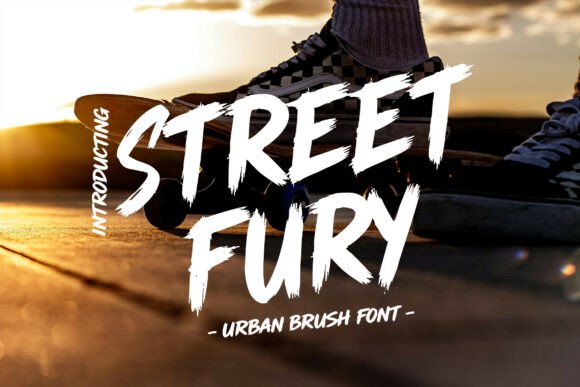
Street Fury: Harnessing Raw Urban Energy for Strategic Design Impact
The Strategic Value of Unfiltered Visual Communication
In a marketplace saturated with clean lines and polished sans-serifs, standing out requires a deliberate departure from the norm. Street Fury is not merely a typeface; it is a visual declaration of intensity. As a bold and untamed brush font, it captures the raw energy of urban street art, offering designers and business owners a tool to convey urgency and authenticity. When planning a visual identity or a marketing campaign, the choice of typography is a foundational decision that influences how your message is received. Choosing Street Fury is a strategic move to inject "noise" into a quiet conversation, signaling to your audience that what you have to say is worth their immediate attention.
For entrepreneurs and creators, the goal is often to bridge the gap between a product and the consumer's emotion. Street Fury serves as that bridge for specific demographics. Its rough textures and explosive strokes are designed to evoke a visceral reaction. This is particularly useful for brands that position themselves as disruptors or challengers. If your operational strategy involves challenging the status quo, your typography should reflect that rebellion. It is a tool for those who need to communicate that they are breaking the rules, not following them.
Aligning Typography with Brand Positioning
Effective branding is about consistency between your promise and your presentation. Street Fury excels in environments where the brand identity is rooted in grit, realism, and high energy. Consider the music industry, specifically genres like hip-hop, punk, or heavy metal. In these sectors, the aesthetic is synonymous with the sound. Using this font for album covers or event posters is not just a stylistic choice; it is a strategic alignment of visual and auditory experience. It assures the viewer that the content within matches the intensity of the design on the outside.
However, strategic planning requires knowing when not to use a tool. Street Fury is powerful, but its power is specific. It is ill-suited for luxury brands requiring elegance, or corporate environments demanding sterile professionalism. The decision to use this font must be grounded in a clear understanding of your audience. If your customer base values tradition and calm, this font will create cognitive dissonance. Conversely, if your audience is comprised of younger adults, activists, or creative freelancers who value raw expression, Street Fury speaks their language fluently.
Practical Applications in Marketing and Design
When integrating Street Fury into your creative workflow, context is everything. It is a display font, meaning it shines brightest in headlines, logos, and short, punchy statements. Attempting to use it for long-form body copy would be a tactical error, as the rough textures can reduce readability over large blocks of text. Instead, reserve it for impact. A poster design featuring a single, large word in Street Fury can convey more emotion than a paragraph of text in a standard serif.
Here are specific scenarios where Street Fury supports better results:
- Event Promotion: For concerts, underground art shows, or pop-up markets, the font creates an immediate sense of atmosphere.
- Product Launches: If you are launching a sneaker line, an energy drink, or a skateboarding brand, this typography signals the lifestyle associated with the product.
- Social Media Graphics: In a fast-scrolling feed, the explosive strokes of Street Fury act as a "scroll-stopper," increasing engagement rates.
- Music Branding: Bands and producers can use the font to establish a visual "sound" before the audio even plays.
Decision-Making and Risk Management
Adopting a high-impact font like Street Fury requires a risk assessment. The primary risk is alienating a segment of your market that associates this style with chaos or lack of professionalism. To mitigate this, you must integrate the font into a cohesive design system. It should not stand alone as a random element. It needs to be supported by color palettes that reinforce the urban aesthetic—think high contrast, neons, or stark monochromes—and imagery that tells a consistent story.
Furthermore, overuse can dilute the message. If every piece of communication screams for attention, the audience eventually tunes out. This is a matter of pacing and rhythm. Use Street Fury for your highest-priority announcements, but switch to a complementary, cleaner font for secondary information. This hierarchy ensures that when you do use the font, it retains its impact. It is about making the noise intentional rather than constant.
Creativity and Productivity in Execution
For freelancers and designers, working with Street Fury can actually boost productivity by reducing the need for complex illustration to achieve a "gritty" look. The font does the heavy lifting of texture and energy. This allows for rapid prototyping of designs that feel complex and hand-crafted. By utilizing the inherent roughness of the strokes, you can create a layered, authentic look with minimal additional assets.
However, creativity comes with the responsibility of legibility. A common mistake is pairing a chaotic font with a busy background. The strategic approach is to use contrast. Place Street Fury against clean, solid backgrounds to ensure the explosive details of the letters are readable. If the background is textured (like concrete or brick), consider adding a subtle overlay or drop shadow to separate the text from the noise. This ensures the communication goal—delivering a message—is not lost in the artistic expression.
Long-Term Value and Audience Connection
Building a brand is a long-term endeavor, and visual identity plays a critical role in memory retention. Street Fury is memorable because it is distinct. When used consistently within a specific context, it becomes a recognizable signature. Think of it as a visual shorthand for "energy" and "rebellion." Over time, your audience will associate that specific typographic style with your brand's values.
This is particularly relevant for educators and content creators who want to appear approachable and dynamic rather than authoritative and distant. While not suitable for academic papers, a workshop series on urban photography or street culture would benefit immensely from this aesthetic. It signals that the content is modern, relevant, and engaging.
Conclusion: The Intentional Use of Chaos
Ultimately, Street Fury is a tool for those who understand that design is not just about looking good, but about communicating a specific identity. It brings the chaos of the streets into the digital or print space, but it demands control. The decision to use this font should be based on a clear strategic objective: to attract a specific audience, to disrupt a quiet market, or to align visuals with a high-energy product.
By approaching Street Fury with a plan—considering readability, context, and brand alignment—you move beyond random decoration. You begin to use typography as a lever for better business outcomes. Whether you are designing a poster, branding a music project, or creating a bold social media campaign, this font offers a way to be loud, gritty, and full of attitude, provided you are ready to back up the style with substance.